
Key facts
- Additional rainfall of 2 to 6 inches (5 to 15 centimeters) was expected through Saturday.1
- The St. Johns River rose above a record level Thursday near Cocoa set in 1953 and is forecast to stay at least 2 feet above flood stage through early next week1
- Some areas could see an extra 8 to 10 inches (20 to 25 centimeters) of rainfall.1
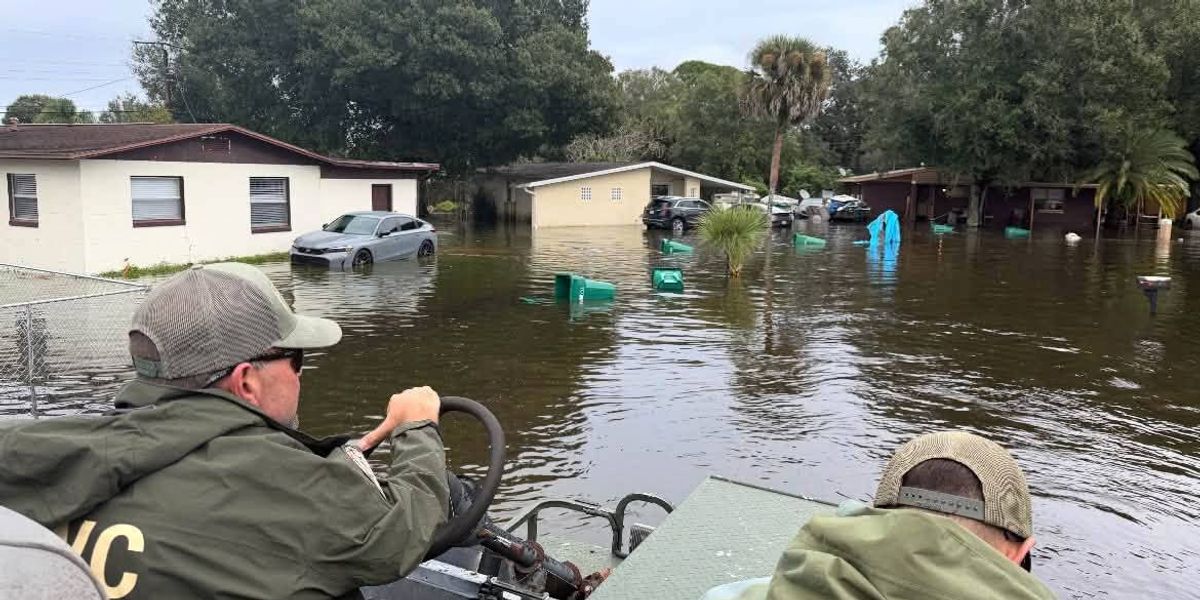
Heavy rains left large swaths of Florida’s Atlantic coast under water and led to dozens of rescues.1
Forecasters warned flooding threats could stretch into next week when a major river is expected to crest well above record levels.1
The National Weather Service posted flood warnings and watches stretching around 200 miles from just south of Melbourne to the Jacksonville area.1
River near record level
The St. Johns River, Florida’s longest, rose above a record level Thursday near Cocoa that was set in 1953.1
The river is forecast to stay at least 2 feet above flood stage through early next week.1
Additional rainfall of 2 to 6 inches was expected through Saturday, while some areas could see an extra 8 to 10 inches.1
The southeast and mid-Atlantic coasts should expect strong winds, dangerous surf and coastal flooding into early next week ahead of the Thanksgiving holiday..1 Parts of Florida’s east coast have been deluged with rainfall totaling more than 17 inches (43 centimeters) in some spots since Tuesday, according to preliminary totals by the weather service.1 That’s in addition to heavy rains that fell earlier this month.1
Rescues and evacuations
The storms shifted north to the Space Coast on Thursday, sending rivers over their banks and prompting water rescues of people and horses during what is supposed to be Florida’s dry season that runs from October to May.1
Jazmin Foster, whose Melbourne home was inundated with water for the second time in two weeks, said, “Never seen such a thing like this in Florida.”1
In Brevard County on Thursday, people with trailers braved knee-deep water to rescue dozens of horses and other animals at the Blue Lake Equestrian Center, an animal hospice and boarding facility in Cocoa.1
The animals were taken to a dry pasture elsewhere.1
First responders conducted nearly 100 high-water rescues across the county, and those numbers continued to climb, Sheriff Wayne Ivey said.1
The city of Palm Bay conducted mandatory evacuations for some residents of a mobile home community.1
Shelters were opened for residents forced from their homes.1
Nearly 200 Florida National Guard personnel with 50 high-water vehicles have been deployed to help up and down the coast, the Division of Emergency Management said.1
Other responding agencies included about 235 officers with the Florida Fish and Wildlife Conservation Commission.1
Storms fueled by El Niño
This week’s storms have been fueled by persistent high pressure over Virginia and a low-pressure system and an associated stationary front in the Gulf, which together have pushed a steady onshore flow across the Florida Peninsula.1
The storms are an offshoot of El Niño, the natural warming of the Pacific near the equator that warps weather patterns worldwide.1
Forecasters said El Niño conditions are expected to persist through the spring, meaning the soggy extreme weather in Florida and California will likely continue through the winter.1
California flooding
The California coast, from the Los Angeles to San Francisco areas, was also swamped with flooding in many areas this week, leaving neighborhoods under water and forcing some drivers to abandon stalled vehicles in floodwaters.1
A long stretch of the coastal Highway 1 was closed south of the Monterey Peninsula due to rock and mud slides.1